Daili started with a diagnosis.
Not a business plan. Not a market analysis. A doctor's office, a long-awaited answer, and a life that suddenly had to be understood differently.
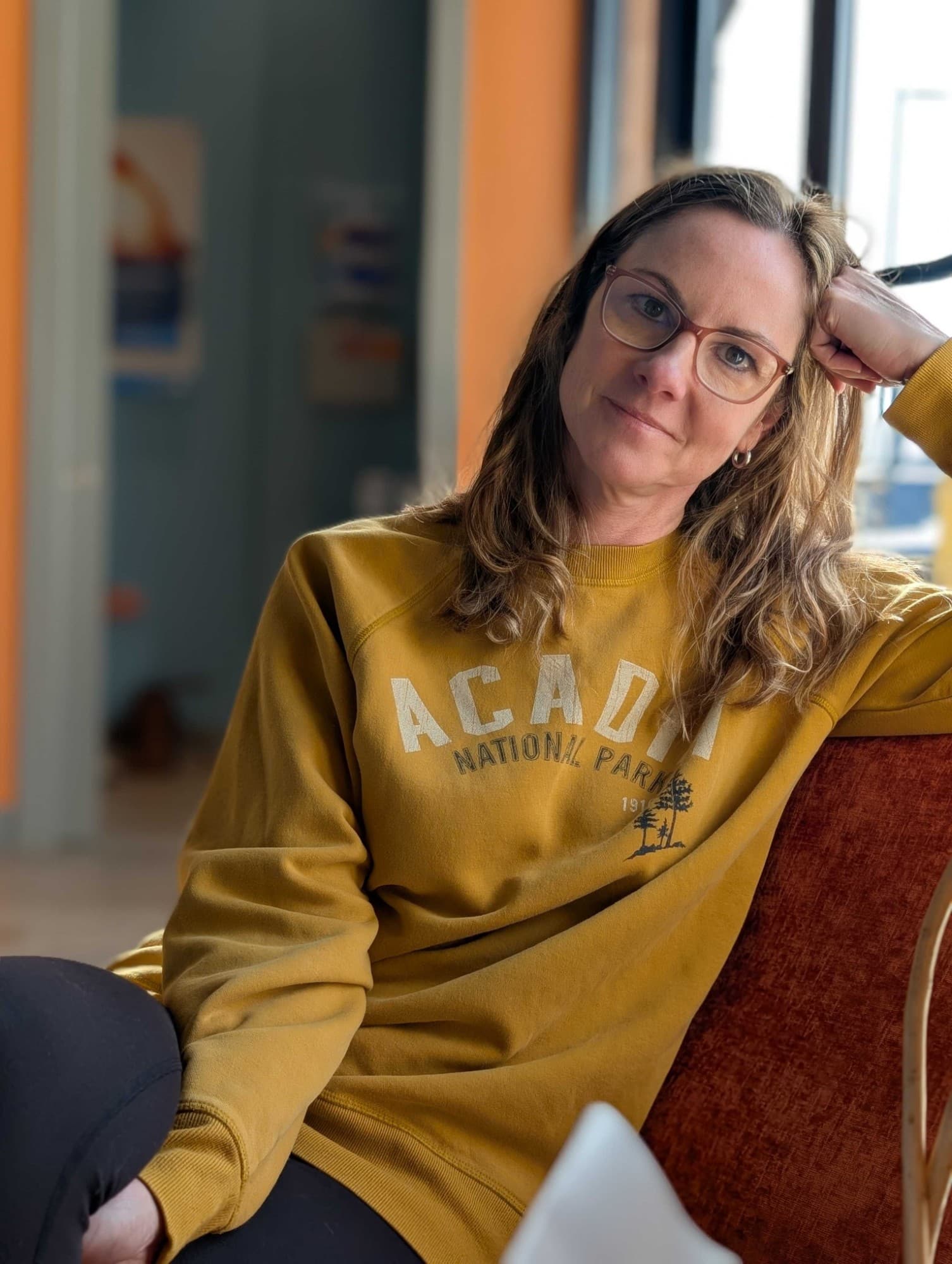
Daili co-founder Rebekah P. lives with Ehlers-Danlos syndrome (EDS)— a genetic, lifelong connective tissue disorder. If you haven't heard of it, you're not alone; most people haven't. EDS affects the collagen that holds a body together, and it shows up differently for everyone: joint instability and dislocations, chronic pain, fatigue that sleep doesn't fix, digestive trouble, and a dozen other symptoms that rarely arrive in the same order twice. It's chronic — there is no cure — and depending on how hard it hits, it can substantially limit daily life and work. For many people, it is legally a disability.
Here's what the pamphlets don't tell you about a diagnosis like that: the hardest part isn't any single bad day. It's the unpredictability. Why was Tuesday fine and Wednesday unbearable? Was it the weather? The skipped meal? The new medication? The stress? When your body keeps changing the rules, every day becomes a guessing game — and your doctor visits become fifteen minutes of trying to reconstruct three months from memory.
For Rebekah, tracking wasn't a productivity hobby — it was survival. Living well with EDS meant watching her body every single day: spotting the early signs of a flare before it arrived, learning which foods, medications, sleep, and stress levels moved the needle, and adjusting before things fell apart rather than after. Done faithfully, it genuinely improved her quality of life. So she tracked — in spreadsheets, in notes apps, in a parade of health apps that each did one thing and talked to nothing else.
None of it did the job. The spreadsheets grew unwieldy, the apps demanded more than a flare day could give, and nothing connected the dots. The information existed — scattered, unconnected, impossible to see patterns in. And patterns were the entire point. The days the pain spiked usually did have something behind them. The stretches of good days did have ingredients. Nobody — no app, no chart, no specialist — was helping put the pieces side by side.
That was the realization Daili is built on: the more aware you become of how you feel — and what shapes it — the more power you have over your own life. That's true whether you're managing a lifelong condition or training for your first marathon.
So she decided to build the thing she couldn't find. It helped that this wasn't her first build: she'd spent her career in data and software — designing apps, shipping products, and building software companies. She knew what good data could reveal, and she knew exactly why every tool she'd tried had failed the people who needed it most. Daili is the answer she wished someone had handed her in that doctor's office: a better way to observe, measure, and change.
One place where thirty seconds a day quietly becomes a record of how your life feels. Check in on your energy, mood, sleep, stress, and pain. Log a meal, a medication, a workout in plain words. Note the medicines you take and why. Then let Daili do what the spreadsheets never could — connect what you do with how you feel, and show you the patterns in your own numbers.
Like a control center for your body.
Chronic illness shaped every design decision
When the founding experience is living in a body that doesn't cooperate, you build differently.
Thirty seconds, because energy is a budget
On a flare day, a demanding app is an abandoned app. The daily check-in was designed to be doable on your worst day — because your worst days are the ones most worth recording.
Plain words, not databases
“Had coffee and eggs, took my meds, short walk” is a complete entry. No calorie counting, no barcode scanning, no forms. Daili sorts it out — you confirm and move on.
Patterns, never judgment
Daili doesn't scold you for the late meal or the missed workout. It shows you what appears alongside what, in your own numbers, and lets you decide what to do about it.
Private by default, always
Health information is personal — sometimes legally protected, always emotionally so. Your data stays yours: medication lists are never shared with providers, sharing is opt-in and anonymized, and access is audited.
Built from illness. Made for everyone who cares.
Daili was born from chronic illness, but it isn't only for it. The same tools that help someone with EDS spot a flare pattern help a runner protect their recovery, a new parent survive the sleep chaos, and a health enthusiast fine-tune what they eat and take. If you truly care about your wellness — whether you're fighting for good days or stacking great ones — Daili is your home base.
And because we know what it's like to sit in a waiting room trying to remember three months of symptoms: when you do see your doctor, your Daili timeline means you never have to reconstruct your story from memory again.
Private by default — you choose what to share.
HIPAA-Compliant Data PracticesDaili is a wellness tracking platform, not a medical device. It does not provide medical advice, diagnosis, or treatment — always consult a qualified healthcare professional about medical concerns. If you think you may have EDS or another connective tissue disorder, the Ehlers-Danlos Society (ehlers-danlos.com) is a good place to learn more.